


INTRODUCTION
In the rapidly evolving landscape of regulatory compliance, the operational audit has gained significant importance for organizations striving to align with standards such as ISO 9001 (Quality Management Systems), ISO 27001 (Information Security Management Systems), and GDPR (General Data Protection Regulation). Auditors and compliance officers need to be equipped with operational tools and protocols to ensure adherence to these regulations efficiently. This article provides a comprehensive operational guide that details the methodology for conducting effective audits, particularly for ISO 9001 and GDPR compliance.
SECTION 1 – AUDIT OBJECTIVE ACCORDING TO THE STANDARD
An audit serves as a systematic examination of management systems against specified criteria. The objectives of an audit may vary by standard but generally include verifying compliance, identifying non-conformities, and ensuring the effectiveness of established processes.
ISO 9001 Requirements
Under ISO 9001:2015, Clause 9.2 outlines the need for internal audits to evaluate the Quality Management System (QMS) effectiveness and levels of compliance with requirements. Specific objectives include:
- Ensuring the QMS conforms to the organization’s requirements and to the requirements of the ISO standard.
- Providing information on the effectiveness of the QMS.
- Identifying areas for improvement.
GDPR Requirements
GDPR Article 32 emphasizes the obligation of data controllers and processors to implement appropriate technical and organizational measures for GDPR compliance. The audit should ascertain compliance concerning:
- Data subject rights.
- Data security measures.
- Record-keeping of processing activities as stated in Article 30.
SECTION 2 – OPERATIONAL AUDIT PLANNING
A well-structured audit planning process is essential to achieve effective results. This involves several key steps:
Definition of the Scope
Clearly delineate the audit scope by specifying the departments, processes, and standards to be included. This might include:
- Specific departments such as HR, IT, or Production.
- Particular processes like supply chain management or data processing.
Documentation Collection
Gather and review relevant documentation, which may include:
- Quality Manuals
- Policy documents
- Procedures and Process maps
- Past audit reports
Identification of Critical Processes
Shortlist critical processes that impact compliance significantly. This may include:
- Data processing activities (for GDPR).
- Non-conformity handling (ISO 9001).
Risk/Control Matrix
Develop a risk/control matrix that connects identified risks to their corresponding controls. This matrix should facilitate a more focused audit approach on high-risk areas.
SECTION 3 – OPERATIONAL AUDIT CHECKLIST
A robust audit checklist serves as a foundation for data collection during the audit. Below is an example checklist tailored for ISO 9001 and GDPR compliance audits:
-
Quality Management
- Is there a documented QMS?
- Are internal audit schedules established?
- Is there ongoing monitoring of key performance indicators (KPIs)?
-
Data Protection
- Is there a designated Data Protection Officer (DPO)?
- Are data processing activities documented as per Article 30 of GDPR?
- Are measures in place for data breach notifications?
-
Training and Competence
- Are staff trained on ISO and GDPR compliance?
- Is there a process to evaluate training effectiveness?
Evidence Collection Examples:
- QMS documentation for quality audits.
- Data processing logs for GDPR compliance.
- Training completion certificates.
SECTION 4 – TYPICAL NON-CONFORMITIES FOUND
Throughout the audit process, several recurring non-conformities tend to emerge, including:
-
Lack of Documentation:
- Missing or incomplete Quality Manuals or Data Processing Records.
-
Inadequate Training:
- Staff not trained in QMS or GDPR requirements.
-
Poor Risk Assessment:
- Failure to identify critical compliance risks.
-
Non-compliance with Internal Audit Plans:
- Scheduled internal audits not conducted.
-
Weak Data Security Measures:
- Insufficient encryption or inadequate access controls.
SECTION 5 – HOW TO STRUCTURE THE AUDIT REPORT
A comprehensive audit report is crucial for effectively communicating findings and suggested improvements. The following are minimum elements that should be included:
-
Objective Statement:
- Clearly define the purpose and scope of the audit.
-
Methodology:
- Explain the approaches, tools, and techniques used during the audit.
-
Findings:
- Summarize the identified non-conformities, strengths, and areas of improvement.
-
Recommendations:
- Provide actionable recommendations linked to findings.
-
Corrective Actions:
- Propose corrective actions with assigned responsibilities and timelines.
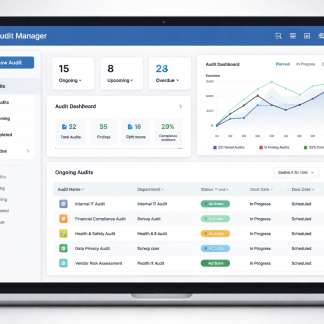
SECTION 6 – OPERATIONAL SUPPORT WITH AUDIT MANAGER SOFTWARE
Leveraging specialized software for audit management can significantly enhance the efficiency and effectiveness of the auditing process. Tools like those offered at https://edirama.eu/categoria-prodotto/audit/ provide features such as:
-
Audit Planning:
- Streamlined scheduling and resource allocation.
-
Checklist Management:
- Customizable checklists tailored to specific standards.
-
Non-conformity Recording:
- Efficient tracking and documentation of non-conformities.
-
Corrective Action Monitoring:
- Oversight of corrective actions with status tracking.
-
Evidence Archiving:
- Secure storage of audit evidence and supporting documents.
-
Structured Report Production:
- Automated report generation based on configured templates.
CLOSING
Conducting a technically sound audit requires a structured approach underpinned by relevant standards and regulations. A properly documented audit process not only ensures compliance but also drives operational excellence by identifying improvement areas, enhancing risk management, and promoting accountability across the organization.

