


INTRODUCTION
Conducting ISO audits, particularly for standards like ISO 9001, is critical for organizations striving for quality management excellence. As auditors, compliance officers, and consultants, it’s vital to understand the specific requirements laid out by the ISO standards to ensure audits are comprehensive and yield fruitful results. This guide will break down the audit methodology, focusing on the operational aspects while referencing ISO 9001 explicitly and offering practical tools and examples.
SECTION 1 – AUDIT OBJECTIVE ACCORDING TO THE STANDARD
When conducting an audit for ISO 9001, particularly focusing on quality management systems, the following points and clauses must be examined:
-
Clause 4.1 – Understanding the organization and its context: Organizations must evaluate and understand external and internal issues relevant to their purpose and strategic direction.
-
Clause 5.1 – Leadership and commitment: Top management must demonstrate leadership and commitment to the quality management system.
-
Clause 6.1 – Actions to address risks and opportunities: Organizations must plan actions to address these risks and opportunities, focusing on improving the quality management system.
-
Clause 9.2 – Internal audit: It is necessary to plan and establish an internal audit program that is consistent with the organization’s objectives.
The main objective of the audit is to verify compliance with these core requirements and evaluate the effectiveness of the quality management system.
SECTION 2 – OPERATIONAL AUDIT PLANNING
Definition of the Scope
The audit scope must be clearly defined, including boundaries and applicability. It should cover the departments, processes, and activities relevant to the ISO 9001 compliance.
Documentation Collection
Gather essential documents such as:
- Quality manual
- Procedures and work instructions
- Previous audit reports
- Management reviews
- Customer feedback reports
Identification of Critical Processes
Identify key processes impacting product quality and customer satisfaction. Examples include:
- Product design and development
- Production planning
- Customer service and support
- Supplier management
Risk/Control Matrix
Develop a risk/control matrix that aligns identified risks with controls in place. For example:
| Risk | Control Measures | Responsible Party |
|——|—————-|——————|
| Failure to meet quality standards | Regular training and quality assessments | Quality Manager |
SECTION 3 – OPERATIONAL AUDIT CHECKLIST
An operational audit checklist should be structured to cover key areas of ISO 9001 compliance. Here’s a checklist encompassing specific controls required during the audit:
- Document Control: Verify that documents are reviewed and approved according to procedures.
- Records Management: Ensure records are maintained per the retention schedule.
- Management Reviews: Check for regular management review meetings documenting outcomes.
- Audit Program: Verify the internal audit program is established, maintained, and executed as planned.
- Corrective Actions: Review documented processes for corrective action that identify the root cause of non-conformities.
Examples of required evidence may include:
- Recent audit records showing findings and actions taken.
- Training logs demonstrating compliance with training requirements.
- Correspondence with customers regarding feedback and complaints.
SECTION 4 – TYPICAL NON-CONFORMITIES FOUND
Recurring errors and critical issues often identified during ISO 9001 audits include:
-
Inadequate Documentation: Missing or poorly defined procedures and work instructions that can lead to misunderstandings and variances in processes.
-
Lack of Management Commitment: Insufficient involvement from top management in promoting and overseeing the quality management system can lead to a lack of direction.
-
Insufficient Internal Audits: Not conducting internal audits according to the established program can indicate a lack of ongoing evaluation of the quality management system.
-
Failure to Act on Non-Conformities: Organizations often fail to implement corrective actions effectively or track them properly, leading to repeated issues.
SECTION 5 – HOW TO STRUCTURE THE AUDIT REPORT
When structuring the audit report, it should consist of the following elements:
-
Title Page: Audit type, date, and scope.
-
Introduction: Brief overview and objectives of the audit.
-
Findings Section: Document each finding, including evidence, the severity of the issue defined in a traffic light system (green, yellow, red), and references to relevant clauses of ISO 9001.
-
Observations: Note areas for improvements that are not necessarily non-conformities but signify concerns for management.
-
Corrective Actions Recommended: Provide suggestions for corrective actions, whom they are assigned to, and acceptable completion dates.
Instructions on Documenting Findings
Document each finding in a clear, precise manner, ensuring consistency. Use a standardized format for reporting to streamline processes and make subsequent audits easier.
SECTION 6 – OPERATIONAL SUPPORT WITH AUDIT MANAGER SOFTWARE
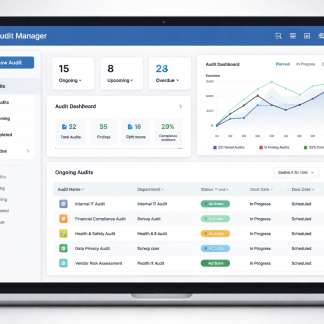
A robust Audit Manager software tool can greatly enhance the efficiency and effectiveness of audit processes. This software allows for:
-
Audit Planning: Streamline scheduling and allocation of auditor resources.
-
Checklist Management: Maintain centralized, version-controlled checklists easily accessible for auditors.
-
Non-Conformity Recording: Log findings systematically while tracking corrective actions.
-
Corrective Action Monitoring: Automatically notify responsible team members of pending actions to ensure timely follow-up.
-
Evidence Archiving: Safeguard evidence documents securely for future audits and compliance verification.
-
Structured Report Production: Generate structured, customizable reports that adhere to organizational branding and reporting standards.
For better insights into executing successful audits, consider exploring the capabilities of this software: Audit Manager for operational effectiveness.
CLOSING
A properly structured and documented audit plays a vital role in the continuous improvement of an organization’s quality management system. By following established methodologies, referencing relevant standards, and utilizing efficient software, auditors and consultants can enhance their effectiveness, ensuring compliance and fostering a culture of quality within their organizations.

